EN
EN




How V-Groove Engineering Delivers True Sharp Corners in Custom Rigid Boxes
Precision Material Thinning: Groove Angle, Remaining Thickness, and Radius Control
V-groove engineering achieves crisp, sharp corners by removing a precisely calculated V-shaped channel from the greyboard before folding. The remaining thickness at the bottom of the groove—the uncut web—is the primary variable controlling the final outer corner radius. A typical setup for custom rigid boxes uses a 90° groove angle; leaving only 0.1–0.2 mm of material yields an external radius well under 0.5 mm. This works because bending stiffness drops with the cube of the web thickness—so even minimal thinning drastically reduces radius. Industry benchmarks for chipboard (2023) illustrate the relationship:
| Remaining Thickness (mm) | Approximate Outer Corner Radius (mm) |
|---|---|
| 0.3 | 2.0 |
| 0.2 | 1.0 |
| 0.1 | 0.5 |
| 0.05 | 0.3 (risk of tear) |
CNC-controlled V-grooving machines maintain depth consistency within ±0.02 mm, ensuring uniform corner sharpness across high-volume runs. Groove angle must also align with board caliper and fold geometry: thicker boards often benefit from a slightly wider groove (92°–95°), which reduces outer-surface compression and preserves flatness and definition on the finished box.
Mitigating Springback and Cracking Through VGroove Craftsmanship
Even with precise thinning, springback—the board’s tendency to open slightly after folding—and micro-cracking at the groove heel can compromise corner definition. VGroove craftsmanship addresses both by managing residual stress. With just 0.1 mm of remaining web, the cross-sectional area is small enough to limit internal rebound force, holding angular deviation below 1° in controlled trials (2022). Cracking is prevented by cutting no deeper than ~80% of board thickness—leaving sufficient fiber integrity—and adjusting groove angle to reduce root stress (e.g., a 92° cut on 2 mm greyboard performs better than 90°). On select production lines, a micro-scoring pass before grooving releases tension along the fold line. This layered approach—blending material science with hands-on expertise—is what delivers the unmistakable sharp corners of premium rigid boxes. When executed correctly, corners remain crisp after wrapping and retain structural fidelity over years of use—unlike the softened, compressed edges common in standard scoring.
Why Standard Die-Cut Edges Fall Short on Sharp Corners for Rigid Box Production
Inherent Limitations of Die-Cut Scoring on Greyboard Bend Radius and Surface Integrity
Die-cut scoring creates a living hinge by compressing, not removing, greyboard fibers. Because no material is subtracted, the fold inherently forms a transitional radius—not a true 90° crease. That radius increases with board caliper: thicker chipboard produces bulkier, more rounded corners that undermine the architectural precision expected in custom rigid boxes. Compression also degrades surface integrity—causing top-liner delamination, uneven paper stretch, and visible textural disruption. Even micro-scoring only masks, rather than eliminates, this fundamental limitation. In contrast, V-groove engineering removes material to create a thin, flexible hinge point—enabling fold geometry unattainable through compression alone. This material-subtraction method is why V-groove remains the only proven technique for achieving true sharp corners in high-end packaging—where flawless geometry and uninterrupted surface continuity are non-negotiable.
Corner Warping and Micro-Cracking Risks in High-End Custom Rigid Box Applications
Die-cut corners store internal stress due to resistance from unscored bulk, leading to warping over time. Temperature fluctuations or light handling can trigger panel misalignment, gapping, or twisting—defects unacceptable in luxury packaging. Surface coatings compound the issue: when forced over a generous bend radius, foil or laminate layers separate from the board, creating micro-cracks that catch light and degrade the unboxing experience. For premium brands, even a single hairline fissure may prompt a quality hold. VGroove craftsmanship eliminates these risks by removing bulk at the fold line—reducing stress concentration and enabling clean, stable, crack-free edges. It’s this technical gap—between compression-based scoring and precision material removal—that drives discerning manufacturers to adopt V-groove for critical corner folds.
Material Science Meets Packaging Tech: Board Properties That Make or Break Sharp Corners
Fiber Orientation, Caliper, and Coating Effects on V-Groove Performance
Board structure directly determines V-groove success. Fiber orientation is foundational: boards cut so fibers run parallel to the groove line fold cleanly; perpendicular alignment invites tearing or inconsistent bends. Caliper must be tightly controlled—especially above 2 mm—requiring deeper, more calibrated grooves to preserve rigidity while enabling a clean fold. Surface coatings add complexity: clay-coated or laminated layers stiffen the outer ply, concentrating stress at the groove root and increasing micro-crack risk without expert tooling adjustments. Rigorous production audits show optimized fiber alignment and caliper tolerance improve corner definition by over 30% (Packaging Tech Review, 2024). Top-tier manufacturers pair such board specifications with adaptive V-groove tooling—not as a one-size-fits-all process, but as a calibrated response to each substrate’s physical behavior—to consistently deliver the crisp, 90° edges synonymous with premium packaging.
VGroove Craftsmanship as a Differentiator in Premium Rigid Box Manufacturing
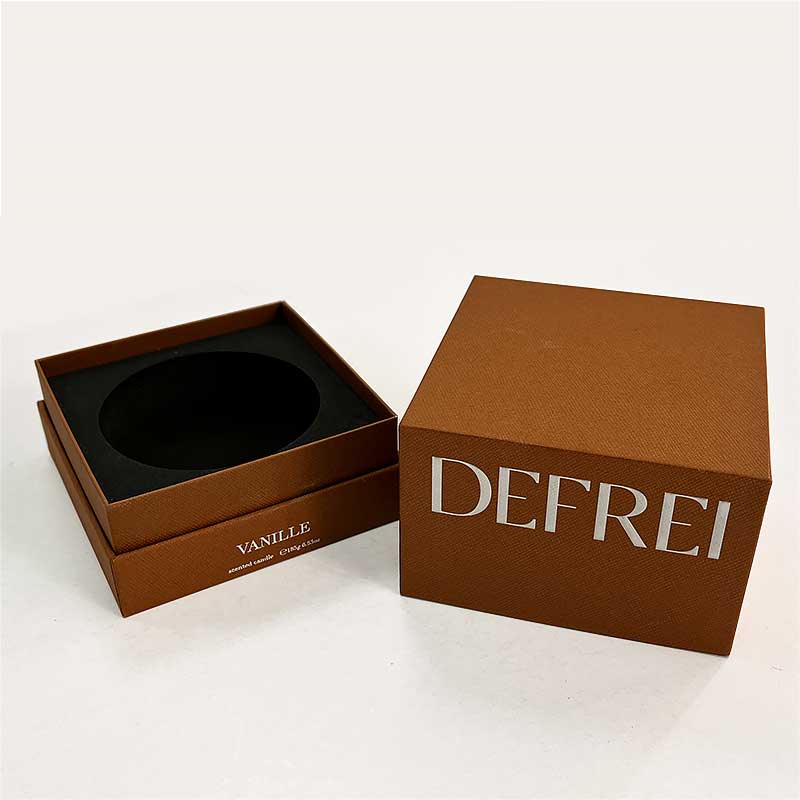
The distinction between a standard box and a premium presentation piece often rests on a single detail: the corner. While many producers can assemble a rigid box, achieving a perfectly sharp, structurally immaculate corner separates commodity manufacturing from true craftsmanship. This precision isn’t inherent to the material—it’s the result of an exacting, unforgiving fabrication process. Transforming flat greyboard into a flawless right angle requires removing material from the interior of the fold line, leaving a paper-thin bridge—often ~0.1 mm—that acts as an external hinge. Folding across this bridge eliminates the compression and bunching typical of blunt-force scoring, yielding a continuous, flat surface identical from every viewing angle. By contrast, budget rigid boxes display subtly rounded, uneven edges where wrap paper forms faint ridges—a visual cue instantly signaling lower quality. This tactile and optical precision elevates perceived value, turning packaging into a deliberate brand statement. For luxury brands, V-groove finishing isn’t merely a production step—it’s a core expression of product identity, reflecting an uncompromising commitment to physical details customers subconsciously associate with exclusivity and worth. It is disciplined execution of this craft—not just access to the machinery—that defines the highest tier of rigid box manufacturing.
FAQ Section
What is V-groove engineering?
V-groove engineering involves removing a V-shaped channel from greyboard, enabling the creation of sharp corners in custom rigid boxes by controlling material thickness and bend geometry.
How does V-groove achieve sharp corners compared to standard die-cut scoring?
Unlike die-cut scoring, which compresses fibers and creates a rounded radius, V-groove removes material to form a thinner hinge point, creating sharper corners with minimal radius.
Why is CNC-controlled V-grooving important?
CNC-controlled V-grooving ensures consistent depth and uniform sharp corner production across large volumes, maintaining precision within ±0.02 mm.
What causes micro-cracking and corner warping in die-cut processes?
Die-cut corners retain stress from unscored bulk, leading to warping and cracking over time due to handling, temperature changes, or coating separation.
How does fiber orientation affect V-groove success?
Fiber orientation is critical; parallel alignment to the groove ensures clean folds, while perpendicular alignment risks tearing or uneven bends.
Table of Contents
- How V-Groove Engineering Delivers True Sharp Corners in Custom Rigid Boxes
- Why Standard Die-Cut Edges Fall Short on Sharp Corners for Rigid Box Production
- Material Science Meets Packaging Tech: Board Properties That Make or Break Sharp Corners
- VGroove Craftsmanship as a Differentiator in Premium Rigid Box Manufacturing
- FAQ Section