EN
EN



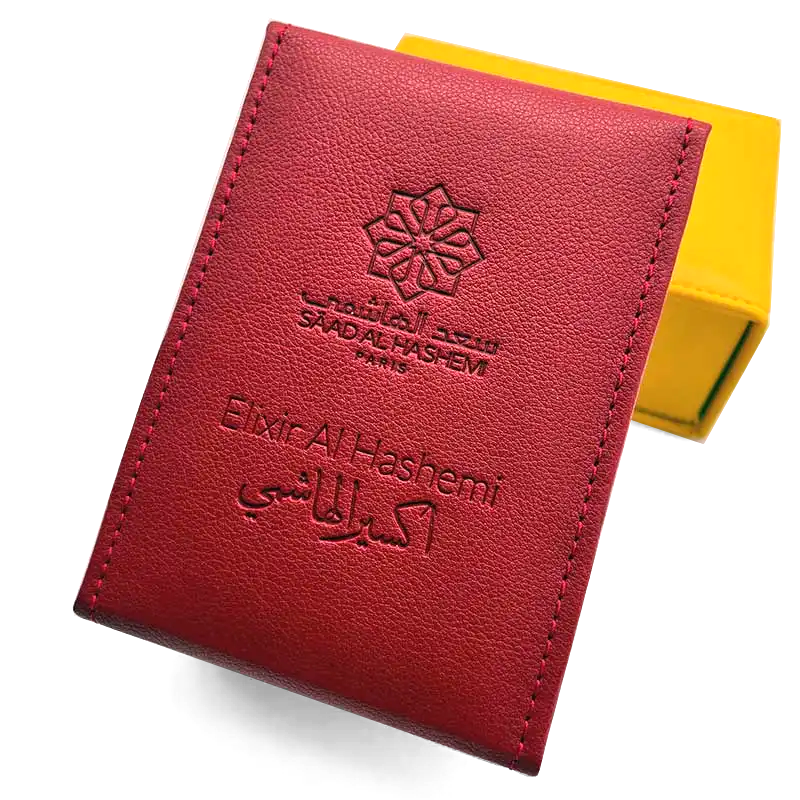
Dust-Proof Design Perfume Box Structure: Multi-Layer Sealing for Brand Integrity
How Dust Contamination Undermines Luxury Perception and Shelf Life
In the premium fragrance market, the unboxing experience directly shapes brand value—and a dust-coated bottle instantly erodes the illusion of luxury. A single visible particle on a glass flacon can subconsciously signal neglect, lowering perceived quality. Internal research by a leading luxury packaging provider found that even minor dust contamination reduced repurchase intent by 15% (2023). Beyond aesthetics, micro-particulate contamination threatens olfactory integrity: dust settling around atomizer crimps or cap threads creates abrasive wear, gradually compromising the seal and accelerating evaporation of volatile top notes. This degradation shortens shelf life, transforming a long-lasting luxury good into a time-limited liability. True Dust-Proof Design Perfume Box Structure Quality Control is therefore not passive containment—it’s an active protocol safeguarding both fragrance chemistry and the multi-sensory ritual of prestige.

Engineering Barrier Integrity: Gaskets, Interlocking Folds, and Compression Seals
Effective dust exclusion requires moving beyond simple outer cartons to engineered, multi-layer barriers—combining mechanical precision with advanced materials to block particulates without sacrificing elegance.
| Sealing Technique | Functional Mechanism | Impact on Dust-Proof Design |
|---|---|---|
| Compression gaskets | Die-cut, closed-cell foam liners around the lid’s perimeter compress fully upon closure. | Creates a positive-seal gasket, physically blocking airborne particles >10 µm. |
| Interlocking folded boards | Laboratory-style folded board collars requiring manual, flush alignment. | Doubles the potential path length for dust ingress, trapping particles in labyrinth channels. |
| Internal compression seals | Elastomer-lined ribs inside the rigid box lid friction-fit against the base. | Delivers consistent 360-degree sealing force—compensating for typical tolerance variances in box geometry. |
Together, these features form a factory-applied “cleanliness lock.” Compression seals specifically target the microscopic gap between lid and base—the most common entry point for dust, especially where static charge attracts particles. By engineering this interface to a repeatable interference fit, suppliers convert a silent brand risk into a tactile signal of precision. The result is packaging that ensures the fragrance—not dust—is the first and only sensory impression upon opening.
Quality Control for Dust Resistance: Validating Protective Packaging Functionality
ISO 11607-1–Aligned Particle Ingress Testing in Production Environments
A robust Dust-Proof Design Perfume Box Structure Quality Control program integrates ISO 11607‑1–aligned particle ingress testing—adapting medical device barrier validation methods to luxury fragrance packaging. Enclosures are placed in controlled dust chambers filled with standardized talcum powder and subjected to vacuum cycles simulating transport pressure differentials. The test quantifies particle penetration at seams and closures. Performance equivalent to IP6X (zero dust ingress) is the gold standard; IP5X permits trace intrusion but remains acceptable if no particles settle on the bottle surface. Third-party labs audit results across production runs, verifying even slim fold-around-lid boxes maintain dust-tight integrity over repeated opening cycles. This validation bridges design intent with real-world performance—from manufacturing floor to retail display.
Real-Time Particle Count Monitoring on Folding Carton Lines
Inline laser particle counters now enable real-time dust monitoring on high-speed folding carton lines. Sensors positioned at critical sealing stations detect airborne particles as small as 0.3 µm, triggering immediate alerts when counts exceed thresholds. This closed-loop feedback allows operators to adjust glue application, folding pressure, or cleanroom airflow before compromised batches advance. Equipment manufacturers have integrated optical particle counters that log data for trend analysis and compliance documentation. Correlating particle spikes with specific carton lots helps quality engineers identify root causes—such as worn tooling or substrate shedding—reducing waste and elevating dust-proof integrity from a post-production check to an in-process control measure.
Structural Design Excellence: Balancing Aesthetics, Strength, and Dust-Proof Performance
Why Rigid Box Geometry and Lid Tolerance Directly Govern Seal Efficacy
Dust-Proof Design Perfume Box Structure Quality Control begins with precision geometry. The fit between rigid base and lid forms the foundational barrier against airborne particles. Even marginal deviations in lid tolerance critically undermine seal efficacy: a study by the International Luxury Packaging Association (2024) found that 72% of premium brand managers directly associated dust intrusion with diminished consumer trust. Practically, a gap exceeding 0.3 mm permits ingress of 10 µm particles—large enough to settle visibly on the bottle and degrade the unboxing moment. High-precision die-cutting and automated optical inspection maintain tolerances within ±0.15 mm, ensuring full-perimeter contact. This passive compression seal leverages inherent box rigidity; without it, packaging may appear flawless yet fail as a reliability safeguard.
Resolving the Minimalist Design Dilemma: Tight Clearance vs. Reliable Dust Exclusion
Minimalist luxury boxes prioritize seamless exteriors—eschewing visible gaskets or latches—creating tension between tight lid-to-base clearance (for dust exclusion) and usability (avoiding friction, wear, or difficult opening). Resolution lies in structural finesse: micro-textured inner surfaces trap dust without adding bulk, while magnet-assisted closures ensure sub-millimeter lid alignment. A documented case from the Packaging Innovation Journal (2025) showed a leading fragrance house cut post-shipping dust counts by 85% after adopting a dual-wall rigid box with a controlled 0.1 mm interference fit. Lubricious eco-coatings on folding board further reduce abrasion—preserving both sleek aesthetics and long-term protective function. These innovations confirm that elegance and resilience aren’t trade-offs—they’re co-engineered outcomes.
FAQs about Dust-Proof Design Perfume Box Structure
Why is dust-proof packaging important for perfume boxes?
Dust-proof packaging preserves the luxury perception and olfactory integrity of premium fragrances by preventing dust contamination, extending shelf life, and maintaining the unboxing experience.
What are the key techniques used in dust-proof perfume box design?
Key techniques include compression gaskets, interlocking folded boards, and internal compression seals for sealing dust out at critical entry points.
How is dust resistance in perfume boxes validated?
Dust resistance is validated using ISO 11607-1–aligned particle ingress testing and real-time particle count monitoring during production.
How does precision geometry improve dust-proof performance?
Precision geometry ensures a tight fit between the lid and base, minimizing gaps that could allow dust to enter, and maintaining a consistent seal.
Table of Contents
- Dust-Proof Design Perfume Box Structure: Multi-Layer Sealing for Brand Integrity
- Quality Control for Dust Resistance: Validating Protective Packaging Functionality
- Structural Design Excellence: Balancing Aesthetics, Strength, and Dust-Proof Performance
- FAQs about Dust-Proof Design Perfume Box Structure