EN
EN



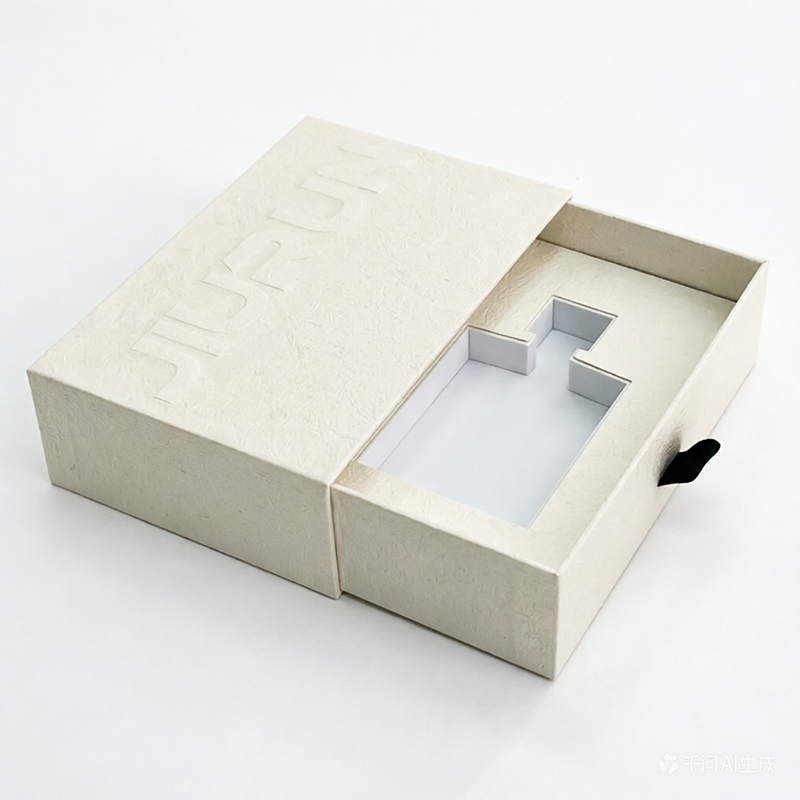
Precision Drawer Box Structure and Mechanical Performance
Tolerance, glide consistency, and closure integrity in cosmetic drawer box structure
The precision engineering of a cosmetic drawer gift box hinges on tight tolerances that govern glide consistency and closure integrity. Modern die-cutting and creasing technologies achieve dimensional accuracy within ±0.1 mm—ensuring the sliding drawer moves smoothly without binding or lateral play. Even microscopic deviations in channel width can cause uneven resistance or premature wear, undermining the premium perception luxury beauty brands depend on. Glide consistency relies on rigid board construction and precisely calibrated drawer channels; high-end manufacturers specify this tolerance for the drawer opening to guarantee repeatable, friction-free motion. Closure integrity is delivered through secure yet effortless retention—such as integrated magnetic catches or tensioned ribbon pulls—that prevent accidental opening during shipping while delivering a satisfying snap upon closure. Rigorous quality control verifies each unit meets these mechanical benchmarks, directly shaping consumer perception: a wobbling or sticking drawer erodes trust before the product is even seen. Structural precision here isn’t just functional—it’s a tactile promise of excellence.
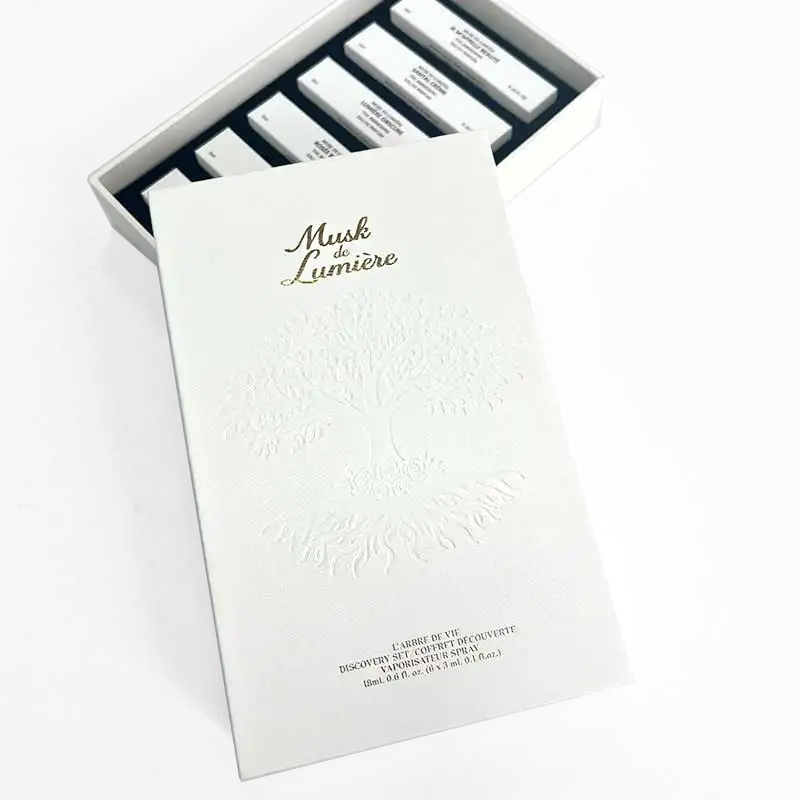
Controlled reveal kinetics: Resistance calibration and tactile feedback engineering for luxury sliding packaging
Opening a sliding drawer cosmetic box is engineered like a watch movement: controlled reveal kinetics define how the drawer travels once pulled, shaping haptic luxury at every millimeter. Calibrated friction—achieved via tensioned fabric ribbons or integrated rails—ensures uniform resistance across the full pull stroke. This resistance is tuned to a deliberate sweet spot: firm enough to convey substance, light enough for effortless one-handed operation. Sound-dampening elements—like flocked rails or felt-lined channels—are standard in premium assemblies to eliminate rattles and produce a silent, soft whoosh that reinforces quality. Even the final stop—a subtle detent or cushioned halt—is intentionally designed to signal completion. For luxury sliding packaging, such fine-tuned kinetics elevate the drawer from container to experience, making the brand’s commitment to sensory detail unmistakable.
The Unboxing Experience: How Sliding Drawer Kinetics Shape Perception
The 7‑second rule: First‑impression neuroscience behind drawer travel speed and sound dampening
Consumers form judgments about premium cosmetics within seven seconds of unboxing—and for drawer gift boxes, those seconds are dominated by motion and sound. A drawer that travels too fast feels flimsy; one that stutters or drags triggers frustration and erodes perceived value. Optimal glide maintains uniform friction, advancing the inner tray at 2–3 cm/second—slow enough to build anticipation, swift enough to avoid fatigue. Acoustic control is equally vital: dry scratching signals poor fit, while a muffled, soft whoosh conveys substance. Premium assemblies integrate flocked rails or felt-lined channels to dampen noise and anchor a subliminal narrative of care. Sensory packaging attributes directly influence brand perception and satisfaction (Lopes et al., 2021), and a seamless slide-and-stop motion ensures that first impression becomes a lasting one.
Neuroaesthetic alignment: Haptic anticipation and sensory coherence in premium cosmetic box unboxing
Unboxing a drawer-style gift box activates a neuroaesthetic loop—the hand’s grip, initial resistance, then steady glide—triggering the brain’s reward circuitry before the product is visible. When tactile feedback aligns with visual finish—smooth interior lining, precise edge reveal, gentle final detent—the experience feels intentional and coherent. A rigid cosmetic box structure provides the stable platform essential for this alignment; structural inconsistency jars the senses and weakens emotional impact. Gradual, linear exposure of product tiers also mirrors natural visual scanning, guiding discovery in a controlled sequence. Each millimeter of travel reinforces the message: this object is precious, and its presentation is deliberate. Leading luxury manufacturers calibrate pull-out resistance between 1.5 and 2.5 newtons to achieve a fluid, almost magnetic motion—transforming a simple open into a resonant, shareable moment of delight.
Materials, Sustainability, and Custom Branding for Cosmetic Drawer Gift Boxes
Rigid board vs. laminated composites: Balancing structural integrity, sustainability, and cost in sliding drawer boxes
Rigid paperboard (1.5–3 mm thick) delivers the robust, premium feel essential for high-end cosmetics, while laminated composites combine paper layers with films or foils for enhanced print fidelity and moisture resistance. From a sustainability perspective, 67% of consumers factor eco-friendliness into packaging preferences (McKinsey, 2023). FSC-certified rigid board is widely recyclable, whereas laminated composites often require specialized recycling streams due to material incompatibility. Cost-wise, rigid board typically carries a 30–50% premium—but that investment pays off in superior structural integrity and a more cohesive luxury unboxing sequence.
Tactile differentiation ROI: Foiling, embossing, and ribbon-pull finishes in high-CPM beauty markets
Tactile embellishments—hot foil stamping, deep embossing, and satin ribbon pulls—directly influence purchase behavior. An industry survey found that 85% of luxury cosmetics shoppers consider packaging design a decisive factor (Dotcom Distribution, 2022). In high-CPM beauty markets, a single-impression metallic foil or finely debossed logo can elevate perceived product value by 12–18%, transforming a sliding drawer into a sensory brand signature. Ribbon pulls guide the reveal while adding soft-touch contrast that reinforces hand-crafted elegance—delivering measurable ROI through stronger shelf impact and increased repeat purchase intent.
Functional Variants: Double Drawer and Ribbon-Pull Designs for Strategic Product Reveal
Double drawer configurations transform standard sliding packaging into a structured product narrative. By separating tiers within the cosmetic box structure, brands can stage complementary items—a serum and its refill, or a multi-step skincare ritual—in a single drawer gift box. This arrangement elevates perceived value, encourages exploration of the full regimen, and maintains the precision closure and smooth glide expected of luxury packaging. It also offers practical, reusable storage post-unboxing—extending brand engagement beyond the first use.
Ribbon-pull details shift the mechanical act of opening into a deliberate, tactile moment. Attached to the inner tray, a color-matched ribbon not only guides sliding motion but signals refinement. In beauty markets where high CPM campaigns rely on instant emotional connection, such small touches directly influence purchase intent. The gradual reveal—controlled by the ribbon’s resistance and the tray’s calibrated travel—aligns with neuroscience-backed first-impression windows, delivering a cohesive sensory experience that reinforces brand integrity and product prestige.
FAQ Section
What are the key factors affecting glide consistency in drawer gift boxes?
Glide consistency depends on rigid board construction, precisely calibrated drawer channels, and maintaining tight tolerances to prevent binding, lateral play, or uneven resistance.
Why is tactile feedback so important in luxury sliding drawer packaging?
Tactile feedback creates a sensory experience that strengthens brand perception. Controlled resistance, sound-dampening elements, and haptic anticipation all contribute to a premium feel.
How does sustainability factor into the material choices for drawer gift boxes?
Sustainability influences consumer choices, with preference for recyclable materials like FSC-certified rigid board, though it often comes at a higher cost compared to laminated composites.
What role does design play in a drawer gift box's perceived value?
Design elements like foiling, embossing, and ribbon pulls elevate perceived value, making packaging a sensory extension of the brand and enhancing its impact in high-CPM markets.
How do double drawer designs enhance the unboxing experience?
Double drawer designs allow for tiered product presentation, creating a structured narrative and extending user engagement while maintaining the luxury feel of the packaging.
Table of Contents
- Precision Drawer Box Structure and Mechanical Performance
- The Unboxing Experience: How Sliding Drawer Kinetics Shape Perception
- Materials, Sustainability, and Custom Branding for Cosmetic Drawer Gift Boxes
- Functional Variants: Double Drawer and Ribbon-Pull Designs for Strategic Product Reveal
-
FAQ Section
- What are the key factors affecting glide consistency in drawer gift boxes?
- Why is tactile feedback so important in luxury sliding drawer packaging?
- How does sustainability factor into the material choices for drawer gift boxes?
- What role does design play in a drawer gift box's perceived value?
- How do double drawer designs enhance the unboxing experience?