EN
EN




Core Structural Differences: Fluted Corrugated Boxes vs. Monolithic Rigid Paperboard
The distinct construction methods of corrugated boxes and rigid paperboard directly dictate their performance in shipping durability. One relies on engineered air-column reinforcement; the other on compressed solid fiber layers—each optimized for different stress profiles.
Flute Architecture and Vertical Rigidity in Corrugated Fiberboard
Corrugated fiberboard’s protective power stems from its fluted medium—a wavy layer of paper bonded between flat linerboards. These arches form vertical columns that act like miniature I-beams, converting vertical pressure into compression resistance across the material’s thickness. The geometry absorbs impact energy during drops and distributes stacking loads evenly. Flute profiles vary by size and function: A-flute (≈4.7 mm) delivers maximum cushioning for heavy items, while micro-flutes like E-flute (1.1–1.2 mm) offer a smoother print surface with sufficient stacking strength for lighter packages. Wall configuration further tailors performance—double-wall constructions (e.g., B- and C-flute combinations) significantly outperform single-wall variants under sustained warehouse stacking loads, maintaining structural integrity through multi-stop logistics without collapse.
Solid Construction and Compression Resistance of Rigid Paperboard
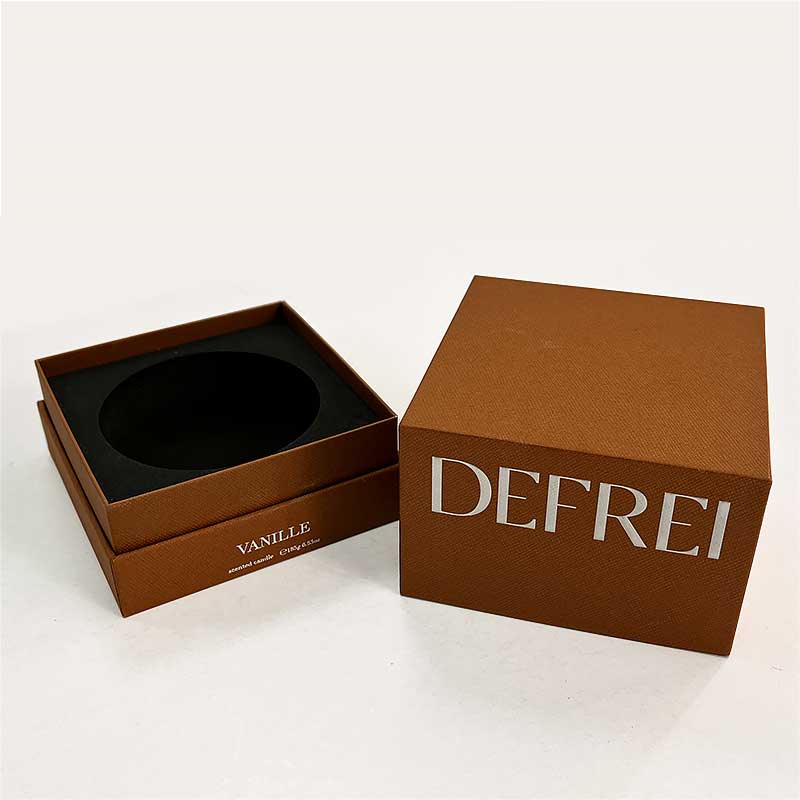
Rigid paperboard is a dense, monolithic sheet formed by laminating multiple layers of bleached or unbleached fiber under high pressure. Its strength derives entirely from inter-fiber cohesion—not air pockets—giving it exceptional flat-crush resistance and a smooth, dimensionally stable surface ideal for precision offset printing and foil stamping. It excels at resisting surface-level compression, making it well-suited for short, controlled supply chains where moderate stacking occurs without severe impact. However, it lacks inherent shock absorption: a sudden drop transmits nearly all force directly to contents. As a result, rigid paperboard performs best when products are already securely nested—or when protection against abrasion and light press forces matters more than dynamic impact mitigation.
How ECT and Mullen Test Ratings Quantify Shipping Durability
Industry-standard tests translate structure into measurable performance. The Edge Crush Test (ECT) measures a corrugated box’s resistance to vertical compression by applying force to its side seam; higher values (e.g., 44 lb/in vs. 32 lb/in) correlate directly with greater stacking strength, enabling precise matching of box grade to palletized load weight in warehouses or trailers. The Mullen (bursting) test assesses hydrostatic pressure required to rupture the linerboard—indicating resilience against rough handling, internal shifting, or puncture. While both metrics appear on the Box Maker’s Certificate, rigid paperboard is rarely ECT-rated; instead, its shipping durability is evaluated via bending stiffness, puncture resistance, or surface-crush tests. Together, these metrics clarify why a 200# Mullen-rated corrugated box withstands repeated conveyor impacts, whereas a thinner rigid carton may suffice only for lightweight, single-drop parcel deliveries.
Real-World Shipping Durability: Impact, Shock, and Multi-Stop Logistics Performance
Corrugated Boxes: Superior Cushioning and Dynamic Shock Absorption
Corrugated boxes thrive in dynamic, multi-stop logistics thanks to their inherent shock absorption. Each flute forms an air column network that compresses on impact—dissipating kinetic energy before it reaches the product. In standardized 1.5-meter drop tests simulating real-world handling, flutes deform and recover, buffering contents from abrupt deceleration. This capability is critical in e-commerce fulfillment, where packages undergo repeated sorting, stacking, and dropping across carriers. Vibration damping also reduces fatigue damage to sensitive electronics or glassware. By converting energy into heat and controlled deformation, corrugated board acts as a sacrificial layer—preserving product integrity even when outer walls show scuffs or dents. That reliability makes it the default for unpredictable, high-handling environments.
Rigid Paperboard: Consistent Protection for High-Value, Low-Impact Shipments
Rigid paperboard offers uniform, predictable protection rooted in its monolithic density. It resists scratches, abrasion, and light top-load pressure far more consistently than corrugated alternatives—making it ideal for luxury cosmetics, jewelry, and premium electronics shipped in palletized, low-drop environments. In reverse logistics, rigid boxes retain structural integrity and premium appearance across returns and refurbishment cycles, reinforcing brand perception. Though lacking air-pocket cushioning, they excel at preserving packaging aesthetics—a key component of the unboxing experience. For shipments where the box functions as part of the product itself, rigid paperboard justifies its investment through consistent presentation and reduced handling-related damage.
Cost-Efficiency and Application Fit: Matching Material to Shipping Use Case
E-Commerce Fulfillment: Why Corrugated Boxes Deliver Optimal Balance of Shipping Durability and Unit Cost
Corrugated boxes dominate e-commerce by balancing durability, weight efficiency, and affordability. Their fluted design delivers reliable shock absorption during multi-stop handling while adding minimal mass—keeping dimensional weight charges low. A leading logistics provider found right-sized corrugated packaging reduced freight costs by up to 15%. Single-material construction simplifies recycling and accelerates packing workflows in high-throughput fulfillment centers. At volume, standard corrugated SKUs often cost under $0.80 per unit—preserving margins on low-dollar transactions where rigid paperboard would erode profitability. This combination of lightweight, scalable protection makes corrugated the pragmatic foundation of modern e-commerce logistics.
Premium Goods & Reverse Logistics: Where Rigid Paperboard Justifies Investment Through Brand Integrity and Returns Efficiency
For luxury electronics, cosmetics, or subscription services, rigid paperboard transforms packaging into a tactile brand extension customers keep. Its monolithic structure resists crushing better than single-wall corrugated for flat, delicate items—reducing damage rates by an estimated 20–30% in drop testing. That reliability lowers costly returns and safeguards brand equity: research shows damaged presentation can halve repurchase intent. In reverse logistics, many rigid boxes integrate magnetic closures or return-ready features, eliminating secondary packaging and cutting total cycle costs. Though unit cost runs 2–4× higher than corrugated, the lifetime value gain—from enhanced unboxing, fewer returns, and streamlined returns processing—delivers net cost-efficiency where experience drives loyalty and lifetime customer value.
FAQ
What makes corrugated boxes better for multi-stop logistics?
Corrugated boxes absorb shock effectively due to their fluted design, which disperses kinetic energy and provides cushioning for products during multi-stop handling and dynamic environments.
Why are rigid paperboard boxes preferred for premium goods?
Rigid paperboard offers uniform compression resistance and an aesthetically pleasing surface, ideal for luxury items, where the box serves as part of the overall product presentation.
How do ECT and Mullen tests differ?
ECT measures vertical compressive strength, useful for stacking-heavy logistics. The Mullen test measures burst resistance, indicating protection against punctures and impacts.
Are corrugated boxes recyclable?
Yes, corrugated boxes are typically made from single-material construction, simplifying recycling and making them an eco-friendly packaging option.